OH MY!

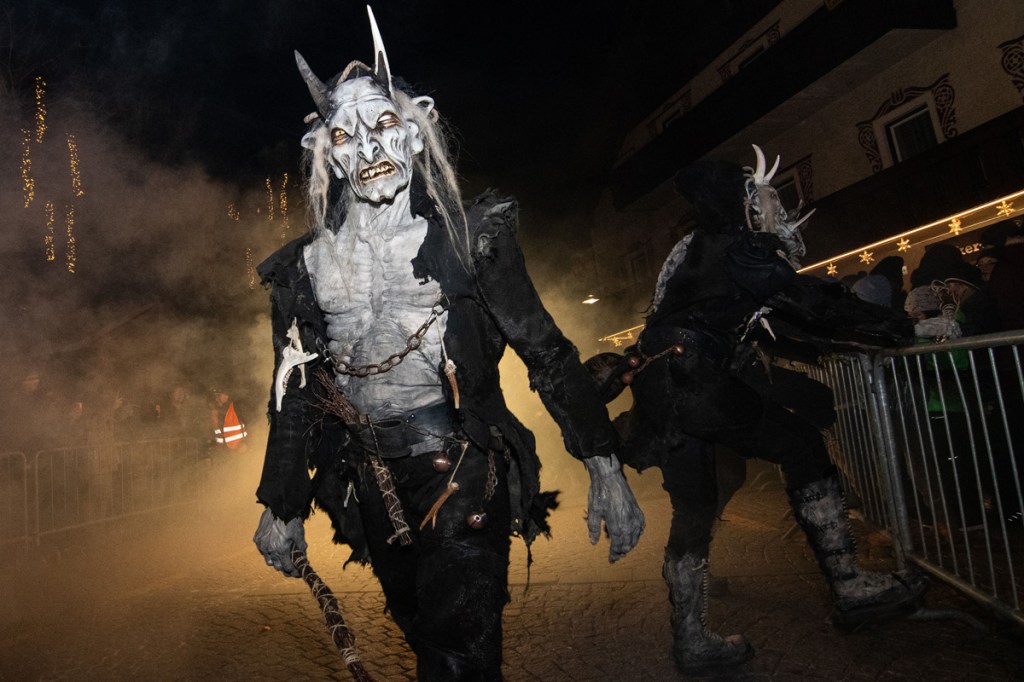
How did I not know about Krampus! Krampus is a Shadow Santa Claus who appears, it would seem, from the end of November through and up to Christmas. When the big Claus appears. I love Krampus and had I known of him would have been celebrating all along. He looks like a stealer of children, does he not? Of course I’ll have to read up more about this creature of myth and lore.

Originally Published by, and From Atlantic Monthly magazine

A Visit From Krampus—Saint Nick’s Dark Companion

While tales of Saint Nicholas feature him bringing gifts to good boys and girls, ancient folklore in Europe’s Alpine region also speaks of Krampus, a frightening beastlike creature who emerges during the Yule season, looking for naughty children to punish in horrible ways—or possibly to drag back to his lair in a sack. Krampus associations in villages hold parades without Saint Nick, frightening children on Krampusnacht, chasing them and hitting them with sticks, during an (often alcohol-fueled) run through the dark streets.

Merry Christmas

To All…

…And to all, a good night

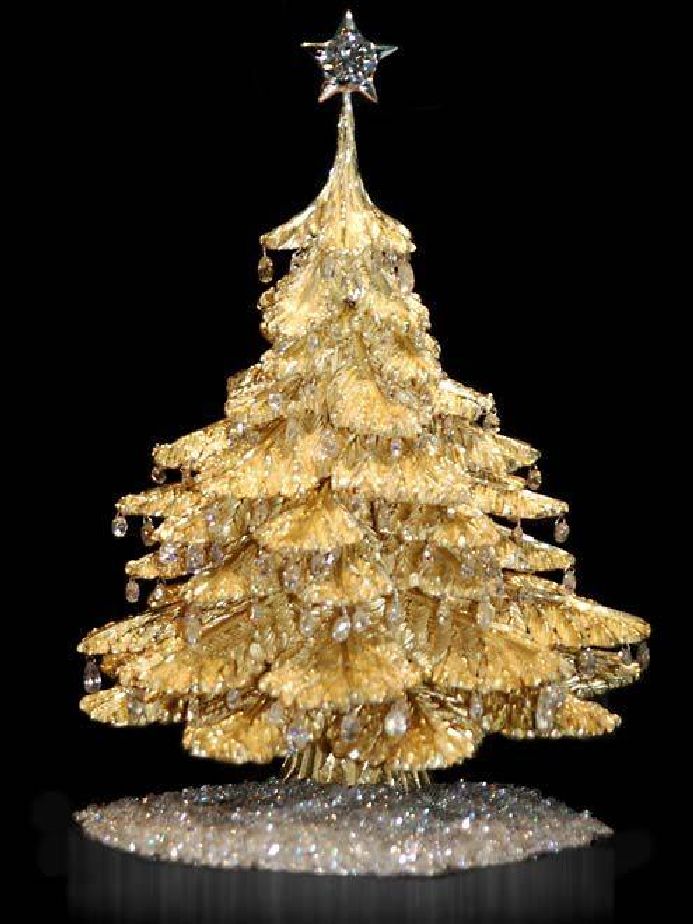
Pounded out of 18K gold, lined with diamonds and pearls. The tree of wishes and light. May we all have golden thoughts of Peace, and diamonds that light our paths and give us compassion for ourselves as well as all beings on earth. May Pearls of love surround us and give us strength to move on and upward, until the heavens be our home, and our Spirits soar free.

Winter Solstice

Happy Winter Solstice

Ending Pain

Because pain is only pain when we are attached to it—both physical and emotional—I dug out some words by Krishnamurti. It’s the holidays. For many there’s an emotional difficulty as we are missing some loved ones. For others those pains translate to the addition of muscle and bone aches and bruises. Did you notice you’re bumping into corners and edges more?

Maybe none of this applies to you right now. Tuck these thoughts aside, then, and come back when there’s a need.

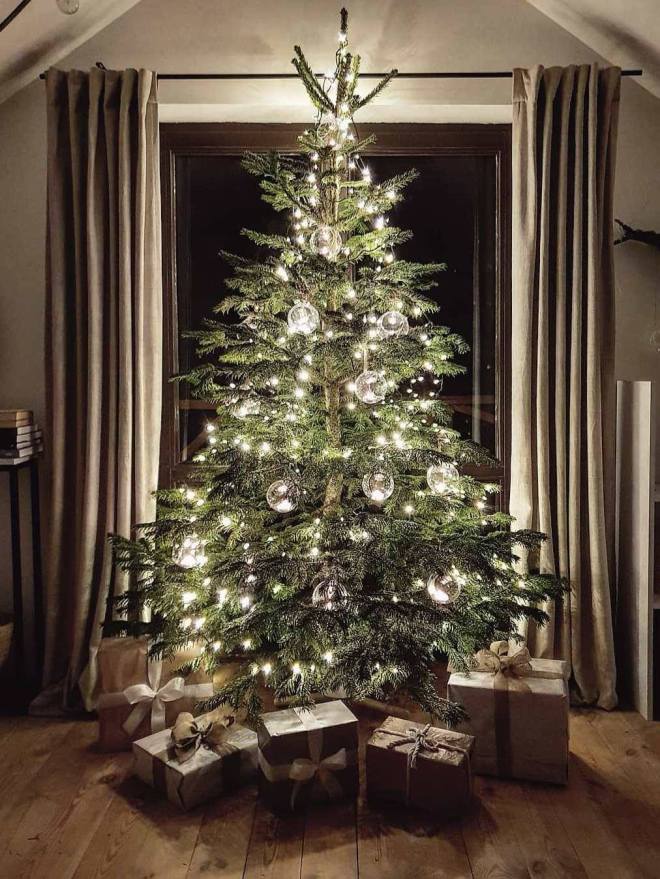
Photos From Hygge—The Art of Comfortable Living

J. Krishnamurti – Words of Wisdom

Here are the passages taken from page 74 of the book “On Love and loneliness” by J.Krishnamurti.

TO OBSERVE PHYSICAL OR BODILY PAIN

All of us know physical pain– a little or a great deal – and we can deal with it medically and in other ways. You can observe pain with a mind that is not attached, with a mind that can observe bodily pain as though from the outside. One can observe one’s toothache and not be emotionally, psychologically involved in it. When you are involved emotionally and psychologically with that pain in the tooth, then the pain becomes more, you get terribly anxious, fearful. I do not know if you have noticed this fact.

The key is to be aware of the physical, physiological, biological pain, and in that awareness not get involved with it psychologically. Being aware of the physical pain – and the psychological involvement with it which intensifies the pain and brings about anxiety, fear – and keeping the psychological factor entirely out req aloofness, a certain quality of unattached observation. Then that pain doesn’t distort the activities of the mind; then that physical pain doesn’t bring about neurotic activity of the mind.

The Guardian Of The Woods

Another wonderful post by Psyche’s Call with Donna May

***

So many artists of all ilks, writers, painters, poets, dreamers, have all sung of the powers that live in the woods. Shakespeare’s “Midsummer Night’s Dream” gives us the Faeire Queene that came from Spencer. Nathaniel Hawthorne wrote of a world containing evil in the darkness of the great forests, or at least in the mixing of medicines from the herbs and flowers gathered there. There are the robed monks that wander the wonderland, working their magic, white and black. Today’s writers of horror stories continue the tradition, (e.g., “The Cabin in the Woods” along with others). Even children’s songs: “Don’t go down to the woods today…the day the teddy bears have their picnic…” (A mixed message, that.)

Father Christmas—much older than our Santa Claus, came from an old English folklore, and didn’t he walk through the woods? Originate there?

And the Tree! Our beautiful, green, pinetree, cut from the forest and brought into our homes. That tree of Pagan origin, symbolizing everything grown and come to life from the forest deep—is brought to us by the woodman through snow and dreams.

Pagan & Christian, White & Black—through the woods.