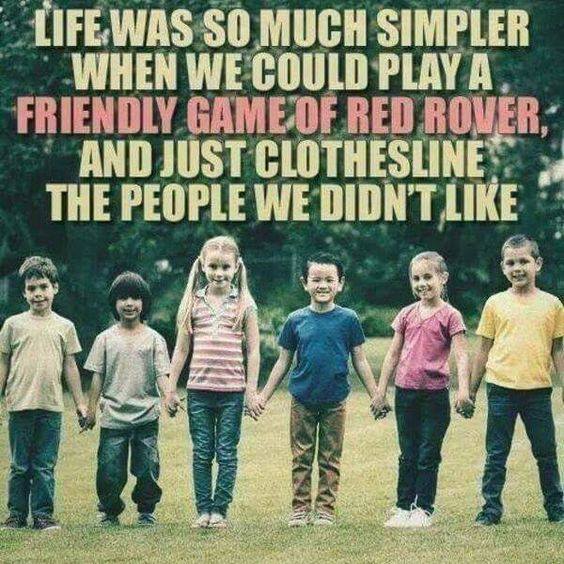
Yes indeed. Except it was a bit more than that. There was the waiting to see if you would be picked for the Right Team! And then, to be Sure you were not the weak link. And then, on top of that, the mad rush & last minute swerve to break thru the opponent’s wall. Ah yes, things were not simple then either. Still. Yeah, it was pretty good.
Consider those most difficult: piano pieces, orchestra pieces, double bass, all of them, yes? I wonder if it was intentional by the composer—to make something so difficult that very few musicians even attempt the piece, score, or presentation. I don’t know how some composers had the required stamina to actually write the piece. Take for example, The Mysterium, scheduled for the end of the world. Seriously. That is when it is to be played. And everyone who attends will have a part to play—there will be no observers. I don’t know when the rehearsals are to be held. Obviously I will not be there. I cannot get through the entirety of the piece as a listen. I get it, I really do, it’s just not for me.
La Campanella is at least welcomed by most everyone. And it is as equally enjoyed and played. Playing it however, is indeed a bit of a challenge.
There was a reason Bottesini was known as the Paganini of the double bass. For extra difficulty points, be true to the period and play it on three strings. Personally I’m delighted that I don’t play the bass and have nothing to be challenged by. And it is lovely. Enjoy.
Last for this go ’round, we simply must play some Bach—J.S. Bach – Chaconne in D—The absolute daddy of violin showpieces. SO exposed.
This entire set, plus a few more (later), was presented by Classic FM.
Won’t it be fun to use a “buttload” in a sentence? Ummmm, I’ll have a buttload of that. The problem with using words that only you know at the time is people assume you’re wrong, or being funny. *Sigh* But, you bet your butt someone will try to use this! And it will be fun. Maybe a buttload of fun.
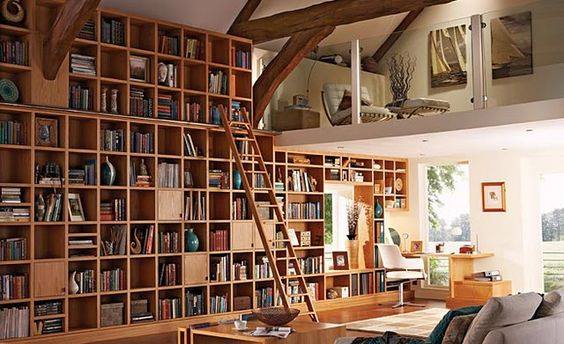
A photo. It catches the eye and then the attention. From the attention I decide to keep or to pass by. If kept I redesign, wander through the room(s), move this or that. Seeking my place in that universe. Things to admire: the desk in front of a window (who are those putting a desk in front of a wall?). The boxes with doors within the shelves. The window within the shelves. The ladder. The loft.
Meanwhile, I jot down thoughts and sketches on the notebook next to me and the computer on the desk that is in front of the window. The thoughts and sometimes the sketches are for the current novel or a future one, or nothing. Just because some thoughts require writing.
Meanwhile, I reconfigure the loft so that it is open on the end and extends a walkway in front of the books and to the ladder. This I do in my mind rather than on paper as I could spend the rest of my life doing architectural drawings. And that belongs to some past of mine.


 Writers Ink—Writing and Stuff