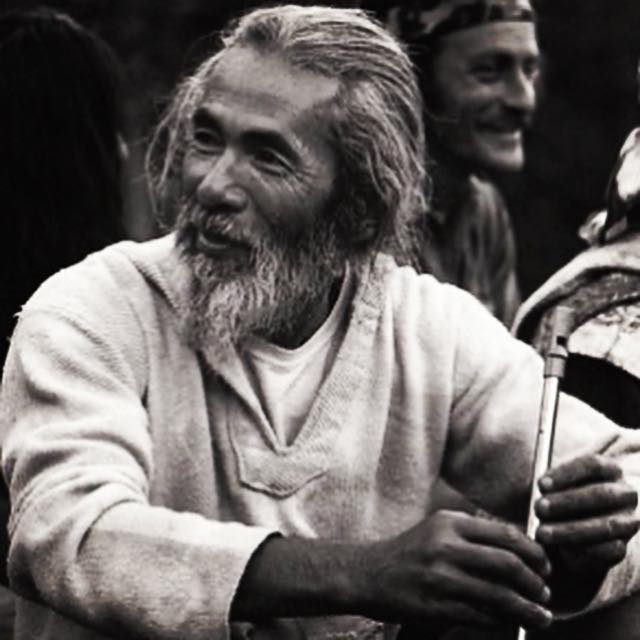
“The feelings that hurt most, the emotions that sting most, are those that are absurd – The longing for impossible things, precisely because they are impossible; nostalgia for what never was; the desire for what could have been; regret over not being someone else; dissatisfaction with the world’s existence. All these half-tones of the soul’s consciousness create in us a painful landscape, an eternal sunset of what we are.” ~ Fernando Pessoa
Poet Fernando António Nogueira Pêssoa was born in Lisbon, Portugal, June 13, 1888. It is also in Lisbon where there is a Pessoa library, and it is most famously the Biblioteca Particular Fernando Pessoa (Fernando Pessoa’s Private Library), housed at the Casa Fernando Pessoa.
That is why I intended on visiting Lisbon when I was in Portugal. However. And that is a big however; there is a great deal of traffic there. And there are also many tourists there. Many. After visiting Porto, (a much smaller city by comparison) there was no desire to go to Lisbon. So I didn’t go. *Sigh*
Pessoa is one of my great loves and I have many of his books. Here are a few of my favorites.
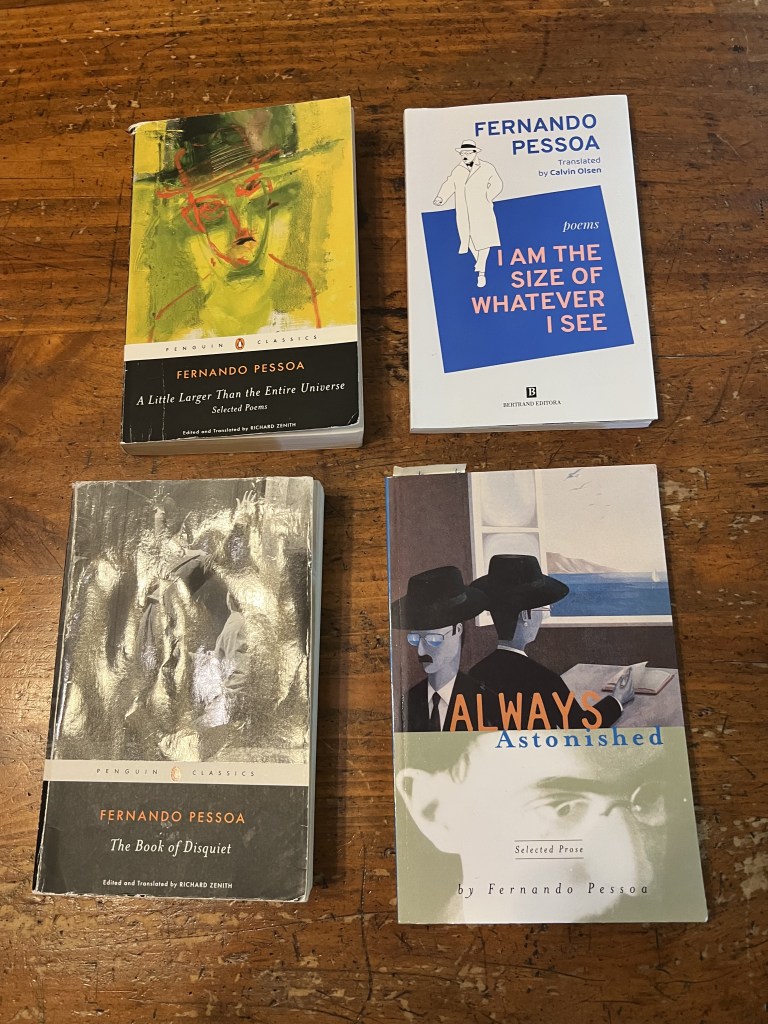
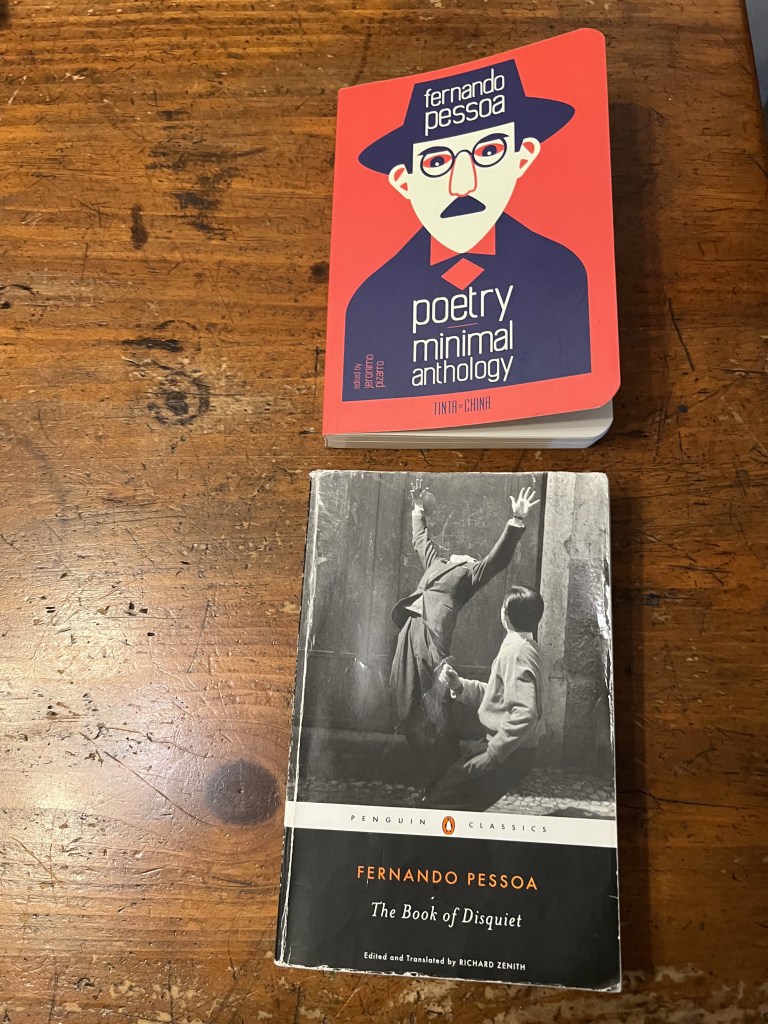
Interesting how The Book of Disquiet came out with the light mixed into the cover photo. Certainly it is the Spirit of it. Here is the actual cover below.
But, why here? Why now do I speak of Pessoa? Because internally we make connections. These connections go from a single conversation to other conversations, and finally to thoughts on the page. So now we are going speak of those conversations, of what led me to consider Pessoa.
The other day at the Coffee Shop someone brought up the subject of movies. (Normally we just play chess there but sometimes we have time left over because one game lasts as long as two.) From there we moved to specific types of movies. Then came reflections on the movie Sybil. Yes, the Sybil of the many personalities, something like 16 of them. (We all concluded that was a great many indeed.) The conversation then evolved into the theory of split personalities, multiple personalities, and finally the evolving psychological theories and integration of the multiples into one.
But that led me alone to other places that I didn’t share. It wasn’t the time to speak of poetry and poets. Not even that of cabbages and kings.
It led me to thoughts of the marvelous mister Pessoa. There is so much to tell about Fernando that it would take a full and long biography to do it. But I am not going to do that. If we don’t want to do that, we would have to pick and choose. So I am going to pick. I am choosing to tell of the thing that brought the whole connection together in the first place, at least in my case. Multiple personalities.
Our poet would sneeze at the idea of only 16 different personalities. He was known for his creation of over 70 “heteronyms”—distinct literary personas. He explored identity, existentialism, and the multiplicity of the self.
In 1914, the year his first poem was published, Pessoa found the three main literary personas, or the heteronyms, as he called them, which he would return to throughout his career: Alberto Caeiro, a rural, uneducated poet of great ideas who wrote in free verse; Ricardo Reis, a physician who composed formal odes influenced by Horace; and Álvaro de Campos, an adventurous London-based naval engineer influenced by poet Walt Whitman and the Italian Futurists.
Pessoa published under his own name as well, but considered those works the product of an “orthonym,” yet another literary persona. While other notable writers of his generation used literary personas, such as Pound’s Mauberley and Rilke’s Malte Laurids Brigge, Pessoa alone gave his heteronyms a full life separate from his own, assigning and adopting in turn each persona’s psychology, aesthetics, and politics. Imagine. The shear number alone makes Sybil look like an amature. Pessoa insisted on identity as a flexible, dynamic construction. He consistently rejected traditional notions of authorship and individuality.
Had Pessoa encountered a psychologist who sought to integrate all of the various personalities there might have been at least two possible results. Had he succumbed he likely would have gone mad. If not, he might have converted the therapist to an elaborated conviction of identity as a flexible, dynamic construction. Even in multiples of self.
Fernando António Nogueira Pessoa was regarded as one of the most important literary figures of the 20th century. He died in Lisbon on November 30, 1935. He died young from cirrhosis of the liver which has led some of us on the pavement to speculate that he drank beyond the modicum of the socially acceptable. We speculate but do not know. In any case, perhaps it was the penchent of one of his many personalities that did him in.
The Biblioteca Particular Fernando Pessoa is the personal library of Fernando Pessoa, Portugal’s most celebrated poet. It contains about 1,300 titles (1,419 volumes) that Pessoa bought, received, edited, or annotated over his lifetime. The collection spans all branches of knowledge, with some rare or unique items such as Secret Shakespearean Seals and The Encyclopaedia of Wit.
Certainly any fan worth their salt would visit that library when in Portugal.