Ending Pain

Because pain is only pain when we are attached to it—both physical and emotional—I dug out some words by Krishnamurti. It’s the holidays. For many there’s an emotional difficulty as we are missing some loved ones. For others those pains translate to the addition of muscle and bone aches and bruises. Did you notice you’re bumping into corners and edges more?

Maybe none of this applies to you right now. Tuck these thoughts aside, then, and come back when there’s a need.
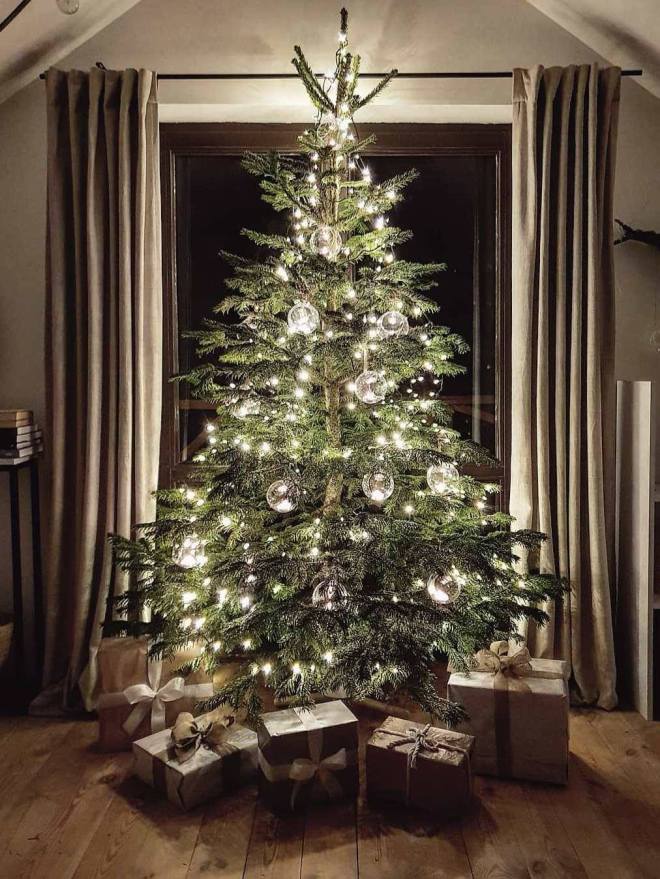
Photos From Hygge—The Art of Comfortable Living

J. Krishnamurti – Words of Wisdom

Here are the passages taken from page 74 of the book “On Love and loneliness” by J.Krishnamurti.

TO OBSERVE PHYSICAL OR BODILY PAIN

All of us know physical pain– a little or a great deal – and we can deal with it medically and in other ways. You can observe pain with a mind that is not attached, with a mind that can observe bodily pain as though from the outside. One can observe one’s toothache and not be emotionally, psychologically involved in it. When you are involved emotionally and psychologically with that pain in the tooth, then the pain becomes more, you get terribly anxious, fearful. I do not know if you have noticed this fact.

The key is to be aware of the physical, physiological, biological pain, and in that awareness not get involved with it psychologically. Being aware of the physical pain – and the psychological involvement with it which intensifies the pain and brings about anxiety, fear – and keeping the psychological factor entirely out req aloofness, a certain quality of unattached observation. Then that pain doesn’t distort the activities of the mind; then that physical pain doesn’t bring about neurotic activity of the mind.

The Guardian Of The Woods

Another wonderful post by Psyche’s Call with Donna May

***

So many artists of all ilks, writers, painters, poets, dreamers, have all sung of the powers that live in the woods. Shakespeare’s “Midsummer Night’s Dream” gives us the Faeire Queene that came from Spencer. Nathaniel Hawthorne wrote of a world containing evil in the darkness of the great forests, or at least in the mixing of medicines from the herbs and flowers gathered there. There are the robed monks that wander the wonderland, working their magic, white and black. Today’s writers of horror stories continue the tradition, (e.g., “The Cabin in the Woods” along with others). Even children’s songs: “Don’t go down to the woods today…the day the teddy bears have their picnic…” (A mixed message, that.)

Father Christmas—much older than our Santa Claus, came from an old English folklore, and didn’t he walk through the woods? Originate there?

And the Tree! Our beautiful, green, pinetree, cut from the forest and brought into our homes. That tree of Pagan origin, symbolizing everything grown and come to life from the forest deep—is brought to us by the woodman through snow and dreams.

Pagan & Christian, White & Black—through the woods.

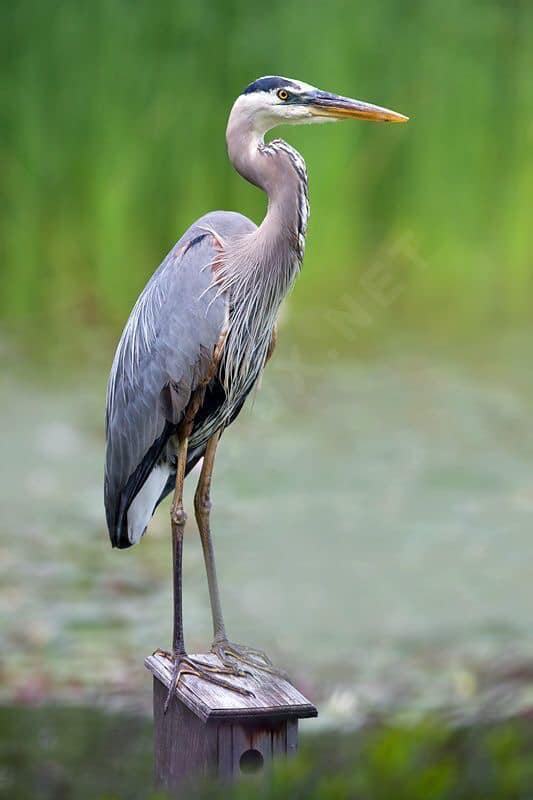
Grand Heron


Psyche’s Call with Donna May

DO NOT BE ASHAMED
by Wendell Berry

You will be walking some night
in the comfortable dark of your yard
and suddenly a great light will shine
round about you, and behind you
will be a wall you never saw before.
It will be clear to you suddenly
that you were about to escape,
and that you are guilty: you misread 
the complex instructions, you are not
a member, you lost your card
or never had one. And you will know
that they have been there all along, 
their eyes on your letters and books,
their hands in your pockets,
their ears wired to your bed.
Though you have done nothing shameful,
they will want you to be ashamed.
They will want you to kneel and weep
and say you should have been like them.
And once you say you are ashamed,
reading the page they hold out to you,
then such light as you have made
in your history will leave you.
They will no longer need to pursue you.
You will pursue them, begging forgiveness.
They will not forgive you.
There is no power against them.
It is only candor that is aloof from them,
only an inward clarity, unashamed,
that they cannot reach. Be ready.
When their light has picked you out
and their questions are asked, say to them:
“I am not ashamed.” A heron will begin
his evening flight from the hilltop.

Photo: “Grand Heron” by Ardea Herodias
Poem originally posted by Luis Alberto Urrea, 2012

Prayer At The Edge

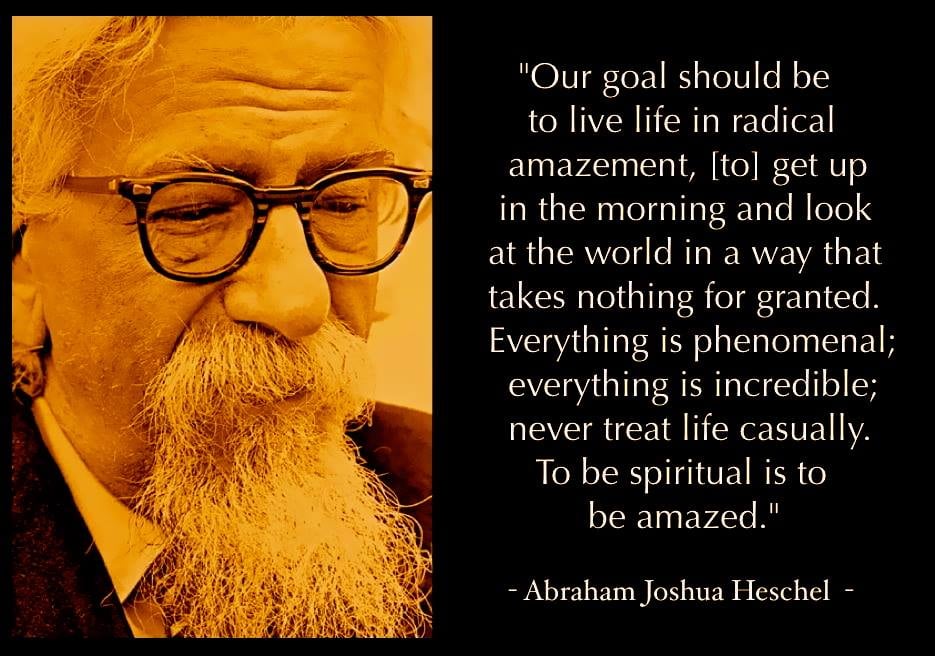
Tao & Zen· 28 November ·  “Faith is not the clinging to a shrine but an endless pilgrimage of the heart. Our goal should be to live life in radical amazement, [to] get up in the morning and look at the world in a way that takes nothing for granted.

Everything is phenomenal; everything is incredible; never treat life casually. To be spiritual is to be amazed.

Prayer begins at the edge of emptiness. Wonder rather than doubt is the root of all knowledge. Just to be is a blessing. Just to live is holy. We can never sneer at the stars, mock the dawn, or scoff at the totality of being.

Self-respect is the root of discipline: The sense of dignity grows with the ability to say no to oneself. The primary purpose of prayer is not to make requests. The primary purpose is to praise, to sing, to chant. Because the essence of prayer is a song, and man cannot live without a song.

When I was young, I admired clever people. Now that I am old, I admire kind people. Know that every deed counts, that every word is power… Above all, remember that you must build your life as if it were a work of art.”

~Rabbi Abraham Joshua Heschel
(January 11, 1907 – December 23, 1972)

Hygge For Love Of Winter

Hygge (pronounced hue-guh not hoo-gah) is a Danish word used when acknowledging a feeling or moment—whether alone or with friends, at home or out, ordinary or extraordinary—as cosy, charming or special.

From my Danish roots, here comes that word that captures the feeling of warmth in a cold but beautiful clime. Ah yes, to visit there, to sit in front of the fireplace, stockinged feet up on the coffee table, books a tumble, hot chocolate in hand.

Posted by Old Moss Woman’s Secret Garden

This is not cold when you have pleasured in a Winter’s Day, when the warmth of snow encircles, when tiny lights match the diamonds in the sun and moon-lit accumulations of snowflakes. That’s when your breath merges with air to make a whispered music. It’s not cold, when you’re not too old to make angels in the snow, when you can dream of other worlds where snowflakes ring like softened chimes.

That’s when someone’s mother makes the porridge with lemon and vanilla so that it, too, sparkles and sings in front of the red-cheeked children, fresh from sledding or skating, embraced by light worn as snow into the self of home.

That’s when Winter is childhood. When Winter is home.