Thinking & Meditating

17.190.391

Met Museum of Art

How to Think Like a Medieval Monk—just in case anyone wants to. A nice article on Lapham’s Quarterly about the White Monks. Pioneers of hydraulic engineering and large-scale agriculture, the white monks described their spiritual transformation in just the same way. They were founded in 1098, as the Cistercian order in France.

One TV show captured the existential horror, and subtle beauty, of 2017 — Quartz

The last 12 months have been marked by political upheavals, natural disasters, and a continuous string of scandals that plagued virtually every industry in the global economy. Though appraisals of 2017 vary depending on the person, it has been an ugly year from a purely objective standpoint—one so messy and brutal and eerie that the world might appear unfamiliar to you in a way you’ve never quite experienced before.

So that’s where TV comes in. People generally watch it for a brief respite from their lives. Who wants heartache or confusion when there’s already so much of that in reality? We want to laugh. We want superheroes to save us. We want to solve fictional mysteries. We want to have things we can’t have, feel things we can’t feel. And there’s nothing wrong with that.

BUT

One TV show captured the existential horror, and subtle beauty, of 2017 — Quartz—The Leftovers

https://youtu.be/tMOVSV7b2QY

Check it out. In the end it’s a love story, and, it’s what 2017 felt like.

Nureyev

fmrudyNureyev

Rudolph Nureyev

“Technique is what you fall back on when you run out of inspiration”

Rudy has been (and still is by many) considered the Best Dancer of all time. I saw him once in Iowa City for a performance—The Nutcracker. I was backstage helping with the children. The ballet calls for many children milling about in some scenes. Sitting on the floor and waiting against the wall, some of the children’s feet stuck out into the corridor. As Rudy was walking down and past us, he kicked one of the boys whose feet intruded. The others quickly withdrew theirs.

He wasn’t a very tall man, and didn’t appear to be very imposing. Small. Until he got close. Once he did, walked by, you could feel a force field around him. Every muscle and vein seemed enlarged and vibrating. His face looked like a fierce, carved rock. You couldn’t say he was good looking, not at that point, as he was so intense and heavily made up. He looked angry. He was of course proud, arrogant, and did not suffer fools (or children) gladly.

He was a Beautiful Dancer. He was a Beautiful Man. And it was said that he could break your heart.


Lolita

NYT

Lit Hub Published from NY Times Article

NABOKOV’s LOLITA

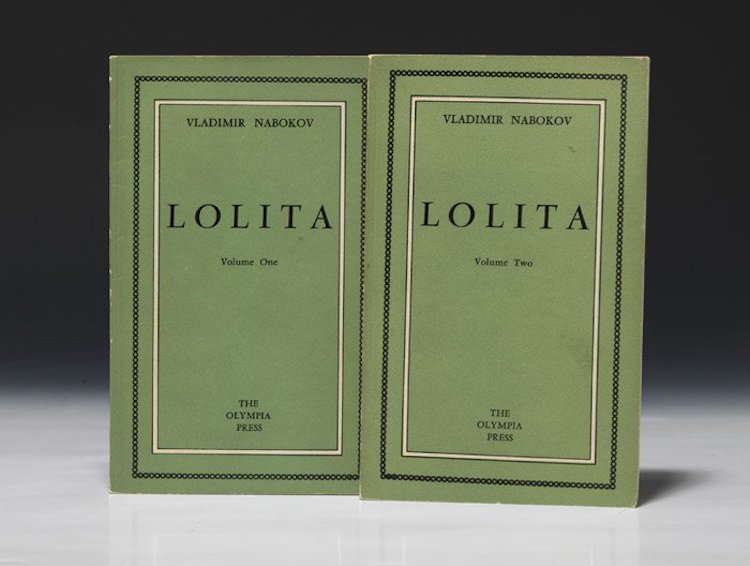
Lolita, it seems, continues to scintillate and argue for discussion. Interesting. Especially interesting to me as I’ve continued to try the book, try to read it, and fail. I just can’t get very far. I find it uninteresting. I periodically read where it’s so exciting right from the start. That of course sends me back to the book. And again. It just doesn’t happen for me.

Orville Prescott, The New York Times, August 18, 1958; “There are two equally serious reasons why it isn’t worth any adult reader’s attention. The first is that it is dull, dull, dull in a pretentious, florid and archly fatuous fashion. The second is that it is repulsive.”

I never got to a repulsive part. That could have been the saving grace for me.

We do need to remember though, the putdown was written in 1958, when the book first came out. I wonder if the same feeling would hold forth after the growing accolades of the critics through the years. Time, and opinions do influence.

From Salter

“In the end, writing is like a prison, an island from which you will never be released but which is a kind of paradise: the solitude, the thoughts, the incredible joy of putting into words the essence of what you for the moment understand and with your whole heart want to believe.”

viaCounterpointPress

via Counterpoint Press

I didn’t mean to write about him, even think about him. —He was a hero of mine until I came to realize some things: what I really liked was the prose. Some of it just breathtaking. It was not about the plot or the story. And he died too late to circumvent the last novel. I don’t know if the prose came to life further into All That Is, I turned away before I could say one way or another. And he personally failed me. (I always take my writers personally.) — But I happened across “Why I Write” in Lit Hub and so I came to be here once more. So there’s the quote and there’s the photo, of a much younger Salter than the one we buried. Indeed. It is for the moment what you understand, and believe.