Deep Breaths And Thoughts

Scientists say because there are fewer cars and planes polluting the air -at long last Mother Earth is able to take a deep breath.

Sleeping In The Forest
I thought the earth remembered me, she
took me back so tenderly, arranging
her dark skirts, her pockets
full of lichens and seeds. I slept
as never before, a stone
on the riverbed, nothing
between me and the white fire of the stars
but my thoughts, and they floated
light as moths among the branches
of the perfect trees. All night
I heard the small kingdoms breathing
around me, the insects, and the birds
who do their work in the darkness. All night
I rose and fell, as if in water, grappling
with a luminous doom. By morning
I had vanished at least a dozen times
into something better.

– Mary Oliver


Posted by masud-moallahyidie2808ealbert-einstein-quotes
When Blue

In my heart there is a blue bird that 
He wants to go

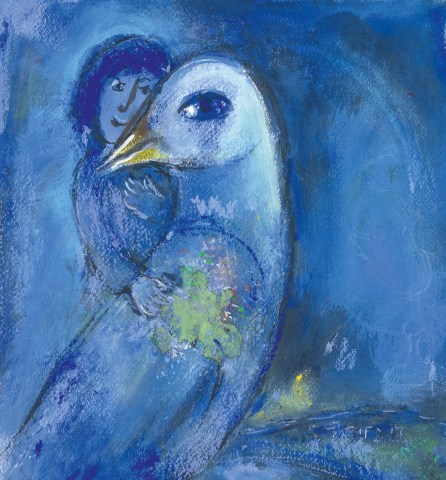
Marc Chagall, the oiseau Bleu (Partial) 1952, private collection Post by Federica De Santi

Marc Chagall, the oiseau Bleu (Partial) 1952, private collection
Post by Federica De Santi

But with him I’m inflexible,
I tell him: stay inside, I don’t
Nobody sees you.

In my heart there is a blue bird that
He wants to
But the verse whiskey and inhale
The smoke of cigarettes
And the whores and bartenders
And the grocer’s clerks
They don’t know that there is him.

In my heart there is a blue bird that
He wants to
But I am inflexible with him,
I tell him: stay down, you want to
Freaking out?
Do you want to air all my work?
Do you want to blow my books sales in Europe?

In my heart there is a blue bird that
He wants to
Only at night sometime
When everyone sleeps.
I tell him: I know you’re there,
Don’t be sad
Then I put it back in place

But he in there a little sings,
I didn’t really make him die,
We sleep together like
With our secret pact
And she’s so cute to cry
A man, but I don’t cry,
And you?

~Charles Bukowski

When The Dead And The Irish Speak

William Butler Yeats

YatesIT

Yeats—Irish Times

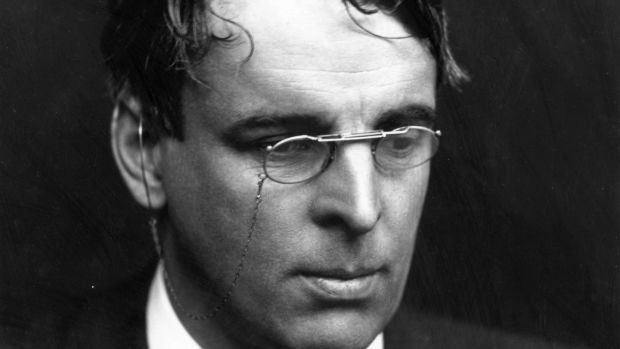
In the “Irish Times” on Saturday, Fintan O’Toole declared there is a Yeats Test that can be applied to determine the state of the world. It’s simple: the more quotable Yeats seems to commentators and politicians, the worse things are.

After the election of Donald Trump, there was a massive surge in online searches for Yeats’s magnificently doom-laden The Second Coming. From data collected by Frank McNally, the poem was more quoted in newspapers the first seven months of 2016 than in any other year of the past three decades.

That’s saying a lot.

But more to the point, it hasn’t stopped. On a Twitter account called Widening Gyre, lines from the poem are sent out into cyberspace without further comment.

“The centre cannot hold” was tweeted or retweeted 499 times on June 24th, 2016, the morning after the Brexit vote. It has continued to appear 38 times a day. It also appeared 249 times in newspapers in the first seven months of 2016. Best of all, Yeats’s lines can be claimed by right, left and centre. And they are.

“Things Fall Apart” And more from The Second Coming

“mere anarchy is loosed upon the world”; “The ceremony of innocence is drowned”; and “The best lack all conviction, while the worst/Are full of passionate intensity”

Black, White, Left or Right, Yeats has become a man for all seasons. And poetry “is loosed upon the land.”

Yates2IT

Yeats—Irish Times

Happy Birthday

To our Dear Friend

vintageBooks&

Vintage Books & Anchor Books

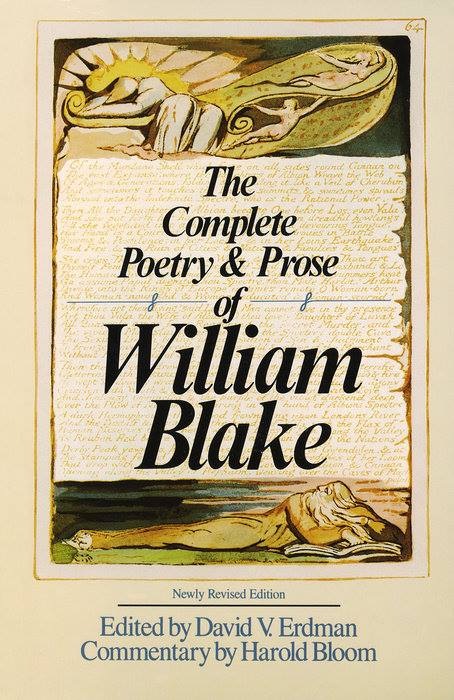
And here’s another appearance of that other friend—Synchronicity—I was just thinking that I didn’t have all of Blake’s poetry, and perhaps I should check into a book store. Then, viola, this appeared on Facebook. A nod to the gods, eh?

Johann’s Birthday

Lapham'sQuartly

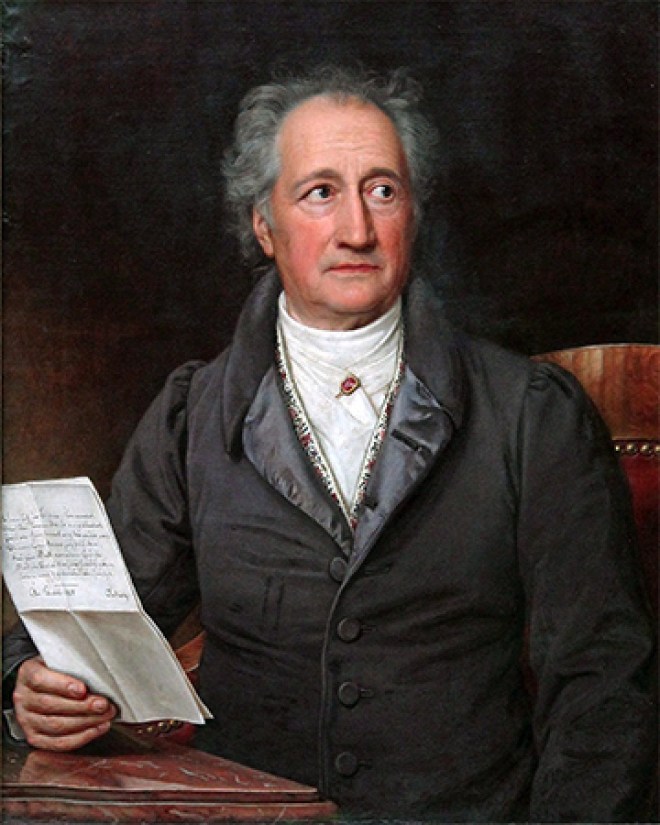
Johann Wolfgang von Goethe

(1749 – 1832)—Reprinted from Lapham’s Quarterly

Having returned to Frankfurt from Leipzig University in 1768, Johann Wolfgang von Goethe began studying the alchemical writings of Paracelsus and Basil Valentine and performing experiments in his own laboratory. The poet, statesman, playwright, novelist, and scientist began his masterwork Faust around 1771, publishing Faust: A Fragment in 1790 and Faust: Part One eighteen years after that.

We have a book of Goethe’s poetry here. It’s in the TBR pile, where it is likely to remain for the rest of my life at the least. Although I do reference it upon occasion, flipping through it to find something of interest. That is done in an easy frame of mind. Not the mad passionate one of the search for the perfect—in a book where you know it will be.